BC homeowner guide · Heating and comfort
Find out which rooms one fireplace can heat.
Can a gas fireplace heat a whole house? Sometimes, under suitable conditions. Even heating in every room needs a complete heating plan. A correctly sized fireplace can warm an occupied living area or a connected open floor. Closed bedrooms, separate levels and the home’s heat loss can limit its reach.
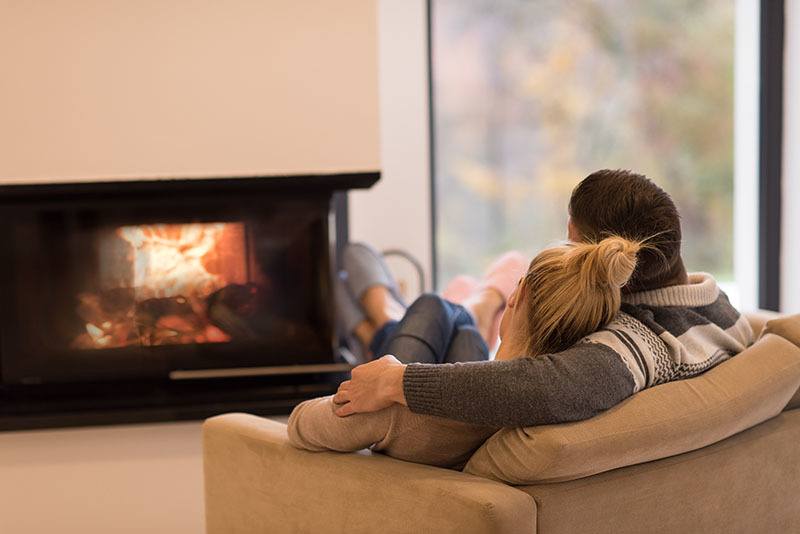
The room you use most
Choose useful heat and comfortable low-fire operation for the occupied living area.
Doors, stairs and distant rooms
Enough total output does not prove that warmth reaches each space.
Assess the whole home
Confirm room loads, distribution, controls and the applicable installation requirements.
01 / Define the job
Zone heating and whole-house heating need different plans
Start by naming the rooms you want to keep comfortable. Heating the living room for an evening is a different task from maintaining bedrooms, bathrooms and a basement through a cold night.
FortisBC’s zone-heating guidance describes using a fireplace to warm the area you occupy while reducing heating elsewhere. That approach can be useful when the rest of the home retains the heat it needs. It does not establish that one fireplace can replace the main heating system.
| Your goal | A realistic starting point | What to confirm |
|---|---|---|
| One living room | A suitable zone-heating application. | Room heat loss, useful output, low fire and seating comfort. |
| An open main floor | A connected heating zone may be practical. | Combined load, open air paths, glazing and thermostat location. |
| Closed bedrooms | Retain dependable heat in those rooms. | Their own heat source or a designed distribution system. |
| Two or more levels | Expect different heating conditions on each level. | Room loads, stairs, closed doors and the coldest spaces. |
| Power-outage comfort | Some models support operation without household power. | Exact ignition, controls, fans and accessory requirements. |
| Replace the main system | Assess the complete home before changing its heating. | Capacity in each room, distribution, installation requirements and backup needs. |
For a planned project, use Bernoulli’s fireplace installation planning and estimates. If your current appliance recently stopped heating as it normally does, start with fireplace diagnosis and repair. A new performance problem needs investigation before you increase the appliance size.
02 / Follow the heat path
Your floor plan sets the fireplace’s reach
A fireplace warms its immediate surroundings through radiant heat and air movement. Some models include a circulating fan. Heat reaching an adjoining space depends on the connection between the rooms and that space’s own heat loss.
An open living, dining and kitchen area gives warmth fewer barriers. A narrow corridor and closed doors create a different task. Increasing the burner capacity can make the fireplace room warmer without resolving the cold room at the far end of the hall.
Open main floor
Assess the connected area as a zone. Include large windows, high ceilings and the places where people sit. The open plan helps heat movement but does not remove the capacity check.
Two-storey house
An open stair may carry some warmth to the landing. Check bedrooms separately, with doors in their usual positions. A warm upper hallway does not establish comfortable rooms.
Basement fireplace
Plan around the basement’s heating need. The room may become warm before enough heat reaches the level above. Keep the upper floor’s heating plan in place.
Compact suite
A connected layout can help a fireplace influence more of the suite. Check the lowest setting, closed sleeping areas and any strata or building restrictions before choosing equipment.
Can a blower or heat-transfer kit help?
A standard fireplace blower affects circulation around the appliance and into the room. It does not provide the same distribution as a balanced central duct system. A ceiling fan may reduce local temperature stratification, but it cannot establish that distant rooms receive enough heat.
Some appliances support manufacturer-approved heat-transfer accessories. For example, Heat & Glo describes Heat-Zone heat management for moving warmth to other rooms. That is a model-specific option. The installer must confirm compatibility, permitted routes and the actual heating role. Do not add improvised ducts or connect a fireplace to the furnace ductwork.
03 / Match capacity to demand
Total BTU output is only part of the whole-house answer
Compare the manufacturer’s useful heat output with the building’s heating requirement. The gas input rating describes fuel supplied to the appliance. It is not the same as heat delivered to the room.
Natural Resources Canada defines Fireplace Efficiency, or FE, as performance over a heating season. It helps compare seasonal efficiency. It does not tell you whether a particular floor plan will heat evenly.
A whole-home total can also conceal a distribution problem. Imagine a living area and two closed bedrooms. Even if an appliance’s maximum output equals their combined heating need, the bedrooms still need a way to receive their share. Capacity at the fireplace and useful heat in each room are separate checks.
The minimum setting matters too
A home needs less heat in milder weather. If the fireplace adds too much warmth to its own room at the lowest setting, you may switch it off before distant rooms become comfortable. Ask about low-fire output information, minimum input and how the thermostat controls the burner.
The BTU and room-sizing guide explains those ratings and shows model comparisons. Use this whole-house guide to decide where that heat needs to go.
Insulation and air leakage change the demand
Two homes with the same floor area can lose heat at different rates. Windows, walls, roofs, floors and uncontrolled air leakage affect the required output. Local outdoor design conditions also matter when the appliance has a primary heating role.
Tell the installer about insulation upgrades, window replacements and persistent draughts. Improving a cold room’s building envelope may change the heating recommendation. Choosing a bigger fireplace cannot by itself resolve every source of discomfort.
04 / Coordinate the systems
Keep the fireplace and the main thermostat working together
A fireplace can provide useful supplemental warmth alongside a furnace, boiler, heat pump or electric room heaters. The operating plan should explain which equipment maintains each part of the home.
Pay attention to the main thermostat. If it sits in the fireplace’s warm zone, it may stop calling for central heat while bedrooms or a basement still need it. That can feel like poor fireplace performance even though the appliance is doing its local job.
- Describe the cold rooms. Note when they become uncomfortable and whether it happens only when the fireplace runs.
- Show the thermostat locations. Include the central thermostat and the fireplace’s remote or temperature sensor.
- Keep normal door positions in the plan. A design that depends on open bedroom doors may not suit your household.
- Confirm the controls. Follow the exact appliance and heating-system instructions. Ask for a practical owner handover.
Will zone heating cost less?
It can reduce the amount of central heating you use, but savings depend on what it actually offsets. Burning gas in the fireplace while the main system continues the same heating duty may simply add energy use.
Compare fuel prices, operating time, appliance efficiency and the existing system. A gas fireplace is not automatically cheaper to run than an efficient heat pump. Keep the spaces that need dependable warmth protected when adjusting other heat. See the efficiency and running-cost guide for the cost comparison.
Backup heat during an outage needs its own check
A gas fuel supply does not establish that the fireplace will operate without household electricity. Ignition, controls, power venting, a blower or heat-transfer accessories may depend on power.
Valor describes battery-powered controls and natural-convection heating as part of its outage operation. That manufacturer example does not establish the behaviour of another fireplace. Check your exact model’s current owner manual.
Even if the burner operates, the available air circulation may change. A warm living room during an outage does not prove that bedrooms, a separate suite or areas containing vulnerable plumbing receive adequate heat. Plan the areas you can realistically occupy and keep the broader household emergency plan separate from the appliance’s rating.
Use the fireplace power-outage guide to identify the questions to check before relying on backup operation.
05 / Prepare your heating plan
Five checks before you choose a model
- Name the heating goal.
List the rooms you want the fireplace to heat, the temperatures you expect and when you use those spaces. Separate regular heating from occasional ambience or outage comfort.
- Assess the room loads.
Provide dimensions, ceiling heights, exterior walls, windows and known insulation details. A heating-focused recommendation needs the actual building conditions.
- Map the heat path and controls.
Show doorways, stairs, corridors, the fireplace location and the main thermostat. Identify rooms that retain their own heating.
- Confirm installation fit.
Check the exact appliance, approved vent system, terminal location, clearances, fuel supply and required services. The heating goal does not override the certified installation instructions.
- Agree on commissioning and follow-up.
Request the manual, control explanation and installation records. After commissioning, compare room comfort during normal use and colder weather. Raise any unresolved cold-room issue with the installer.
Technical Safety BC’s home-modification guidance includes fireplace installation or replacement and gas piping or vent alterations among permit-related projects. The issuing authority depends on the property location. Have the contractor identify the applicable permits and responsibilities in the proposal.
What should you send Bernoulli?
Your floor plan
A simple sketch is useful. Mark the fireplace, room measurements, levels, normal door positions and thermostat location.
Your current heating
Describe the furnace, boiler, heat pump or room heaters that will remain. Include existing fireplace details and the specific comfort problem.
For planned installation or replacement, Bernoulli provides a free estimate. If an existing fireplace has a fault or has lost its usual heat, the diagnostic appointment is $135. Repair labour, parts and materials are extra. Tell us which situation applies when you call.
Questions homeowners ask
Whole-house fireplace heating FAQ
Can a gas fireplace heat a 2,000-square-foot house?
Floor area alone cannot answer that. Check the home’s heat loss, the exact fireplace output, room layout and how heat reaches each space. A large connected living area may be comfortable while separate rooms still need their own heating.
Can it heat an entire open floor?
It may, when useful output matches the connected zone’s heating need and air can circulate. Include glazing, ceiling height, exterior exposure and the minimum setting in the assessment.
Will the heat travel upstairs?
Some warm air can move through an open stairwell. The landing and closed bedrooms may behave differently. Check the rooms you need to keep warm rather than judging the result from the stair area.
Can a basement fireplace heat the main floor?
Do not rely on it without an assessed heat-distribution plan. The basement can warm substantially before the rooms above receive enough heat. Retain dependable heating upstairs.
Does a bigger BTU rating solve cold bedrooms?
More capacity does not remove the barrier created by closed doors or distant rooms. Review the bedrooms’ own loads and heating provision. Excess heat in the fireplace room may make the overall result less comfortable.
Can I connect the fireplace to my furnace ducts?
Do not improvise a connection. Use only accessories and routes approved for the exact appliance, with a qualified installer confirming the installation. A normal fireplace blower does not function as a central distribution system.
Can the fireplace replace a furnace or heat pump?
Only consider that after a complete heating and installation assessment supports the proposed arrangement. Every required room needs suitable capacity and distribution. A product’s coverage claim does not establish that result.
Why do other rooms get colder when I use the fireplace?
The central thermostat may be sensing the warm fireplace zone and reducing the main system’s heating call. Tell the contractor when this happens and show both control locations. The cause and solution depend on your heating system.
Will it heat the house during a power outage?
Outage operation is model-specific. Check ignition, controls, batteries, venting and accessory power needs in the manual. Even a functioning burner does not guarantee the same distribution or comfortable temperatures in every room.
What if my existing fireplace suddenly feels less effective?
Arrange diagnosis before choosing a larger replacement. A fault, control issue or building change may explain the difference. A planned replacement should address the cause and the present heating goal.
Bernoulli Heating and Cooling
Make a heating plan for the rooms that matter to you.
Send a floor plan, photos and your comfort goal. We can help review the useful heating zone, appliance options and complete installation scope.
Planned installations and replacements · Metro Vancouver and Fraser Valley · 24/7 phone support